Understanding your cycle
Are my periods normal?
Periods vary enormously between women. The more useful question is whether this is normal for you, and whether something has changed.
Periods vary enormously between women — and even for the same woman at different stages of life.
So “normal” doesn't mean that everybody should have a 28-day cycle, bleed for exactly five days and be able to predict their next period to the hour.
A more useful question is:
Is this normal for me — and has something changed?
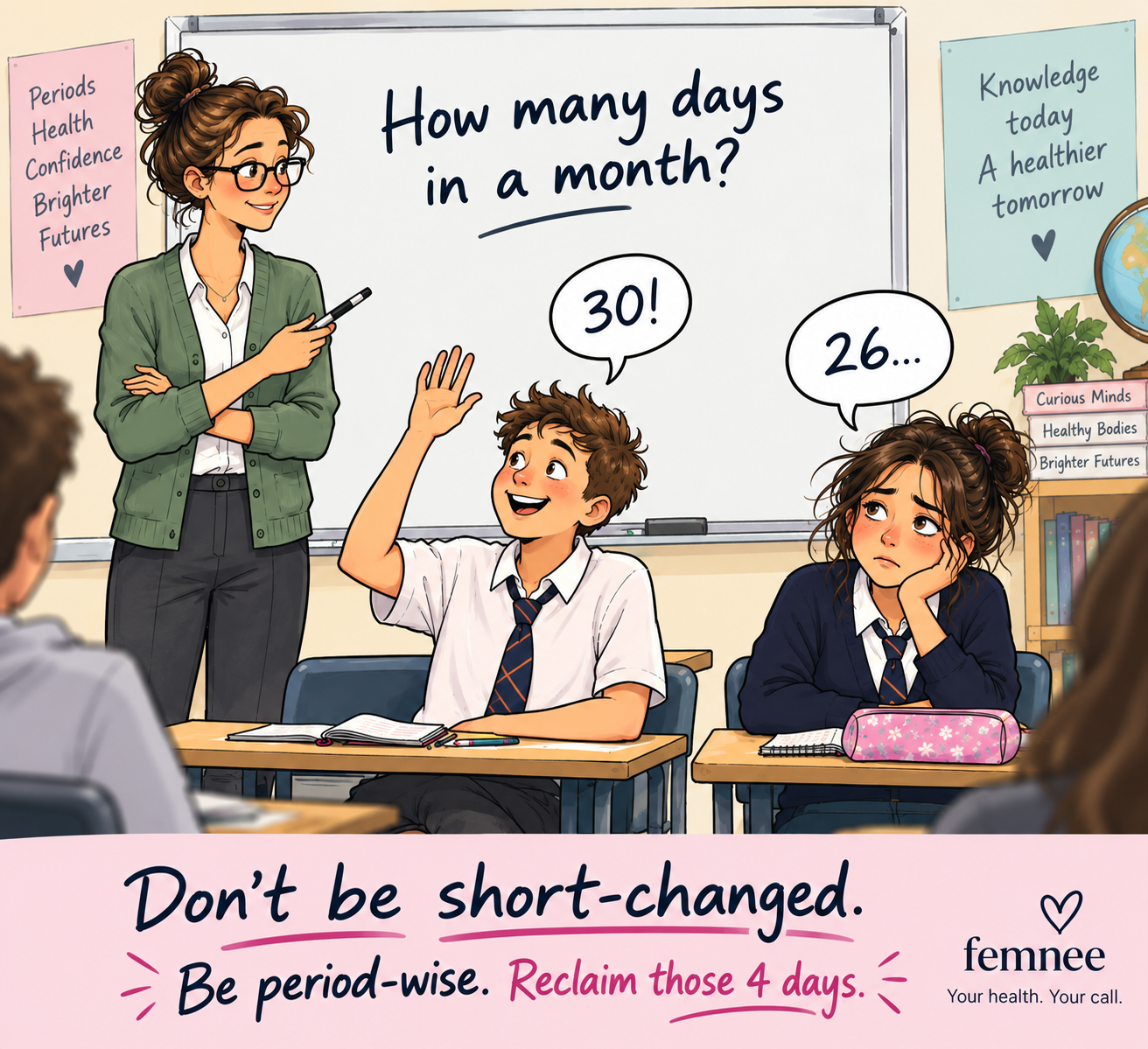
For many adult women, periods come roughly every three to five weeks.
Some women are remarkably regular. Others naturally vary by several days from month to month.
An occasional early or late period is usually not particularly significant.
What is more useful is the pattern over time.
If your periods have always been fairly predictable and suddenly become much more frequent, much further apart or unpredictable, it is reasonable to ask why.
Many periods last somewhere around 2–7 days.
Some women bleed quite heavily for a day or two and then very lightly. Others have a more even flow.
The number of days alone doesn't tell us whether something is wrong.
What matters is the combination of duration, amount of bleeding, pain, regularity and whether your periods interfere with ordinary life.
Think practically.
Are you:
- changing pads or tampons unusually frequently?
- using two forms of protection together because one isn't enough?
- regularly bleeding through clothes or bedding?
- passing large clots?
- avoiding work, exercise, travel or social activities because of your period?
- becoming tired, breathless or iron deficient?
As a gynaecologist, if I am allowed just one question to see if your bleeding is excessive, I will ask about passing large clots. Normal menstrual flow (blood plus the endometrium) is acted upon by enzymes which dissolve it. Large clots suggest the enzymes have been overwhelmed.
You don't need to prove how many millilitres you lose before you're allowed to call your periods heavy.
If bleeding is the main problem, see Heavy periods — when should I worry?.
Changes can occur with pregnancy, contraception, stress, substantial changes in weight or exercise, PCOS, thyroid problems and the approach to menopause.
Problems within the uterus — including fibroids, polyps and adenomyosis — can also change bleeding.
Sometimes there is no important underlying problem.
The circumstances matter: your age, previous pattern, contraception, other symptoms and possibility of pregnancy all help us decide whether anything needs investigating.
Bleeding between periods or after sex can have several explanations. Many are benign, but persistent or recurrent bleeding deserves assessment.
If pregnancy is possible and you have unusual bleeding — particularly with significant pelvic pain, dizziness or feeling unwell — seek medical advice promptly.
Depending on your symptoms, age and menstrual pattern, assessment might include a pregnancy test, blood tests, examination or pelvic ultrasound.
But not everybody with an unusual period needs all of these.
If an investigation would help, Femnee currently offers some scans and blood tests at subsidised prices, with the results explained by a doctor.
See tests, what's included and current pricesSources and further reading
- NHS information on periods and heavy periods
- NICE guidance on heavy menstrual bleeding
Medical review
Medically reviewed by Dr Mahadeo Bhide, MD, MRCOG
Last medically reviewed: September 2026