Common concerns
Heavy periods — when should I worry?
When bleeding is excessive for you, why periods become heavier, and how heavy periods can cause iron deficiency.
One woman's “heavy period” may sound perfectly ordinary to another.
The important question isn't whether somebody else bleeds more than you.
It is whether your bleeding is excessive for you, affecting your life, or causing health problems such as iron deficiency or anaemia.
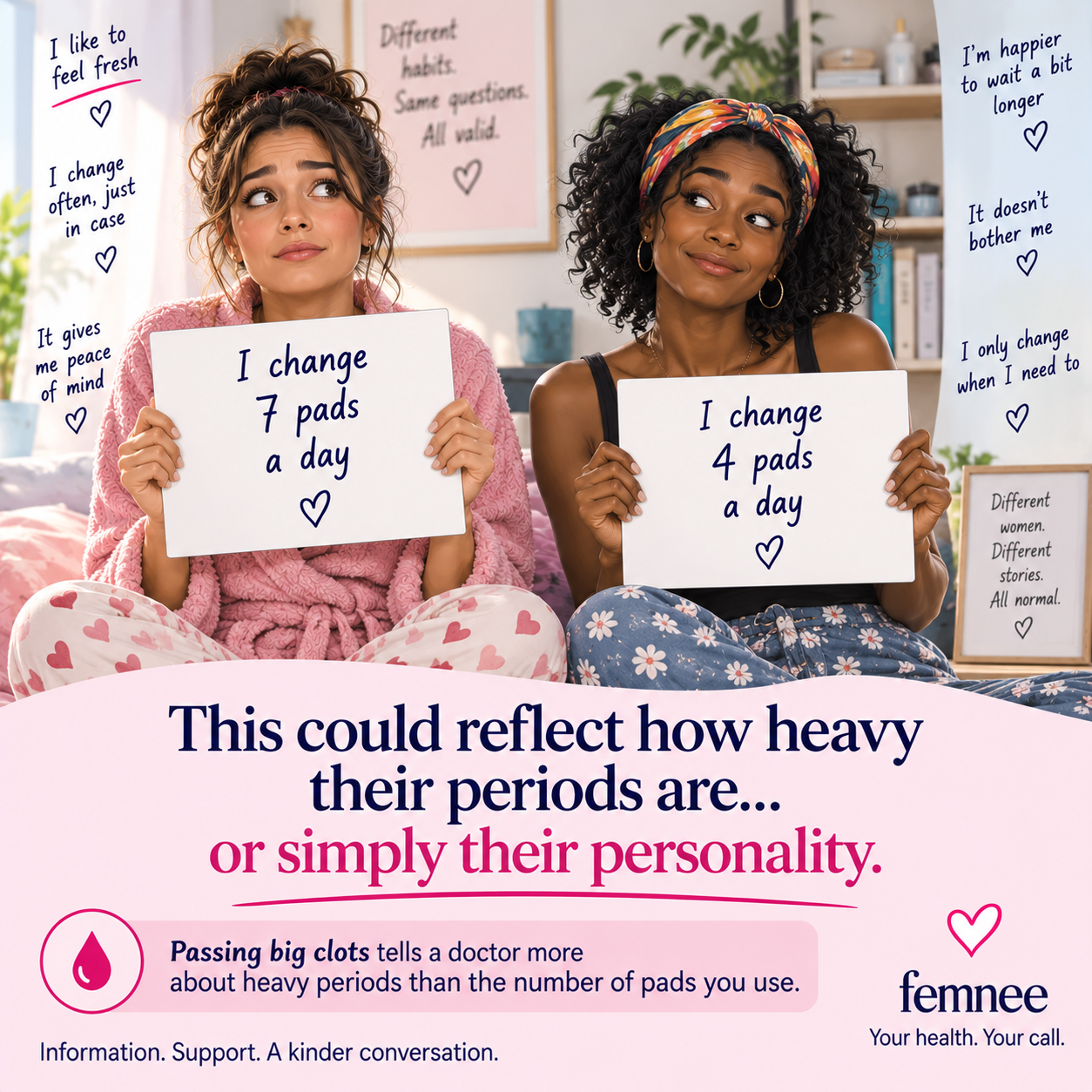
Periods may be considered heavy when the amount of bleeding is interfering with your physical, social or emotional quality of life.
You may notice that you:
- need to change protection very frequently;
- need both pads and tampons together;
- bleed through clothes or bedding;
- pass large clots;
- avoid leaving home or plan activities around your period;
- feel exhausted during or after periods.
If your period dictates what you can wear, where you can go or whether you can work normally, that matters.
If you are unsure what is usual for you in the first place, start with Are my periods normal?.
Sometimes there is no structural abnormality. Possible causes include:
- fibroids;
- adenomyosis;
- uterine polyps;
- problems with ovulation;
- some contraceptive methods;
- hormonal changes approaching menopause;
- less commonly, bleeding disorders or abnormalities of the womb lining.
Your age and other symptoms help determine which possibilities are most relevant.
Yes — and sometimes tiredness is the symptom women notice before they realise just how much blood they are losing.
Repeated heavy bleeding can cause iron deficiency and iron-deficiency anaemia.
You may feel unusually tired, weak, breathless, dizzy or notice palpitations.
A blood count can check for anaemia, and sometimes additional iron studies are useful.
Heavy periods and persistent tiredness are worth mentioning together.
A pelvic ultrasound can help identify conditions such as fibroids and adenomyosis and assess the uterus and ovaries.
Whether you need one depends on your history, examination where appropriate, age and other symptoms.
Sometimes blood tests are more useful initially. Sometimes both are appropriate.
If an investigation would help, Femnee currently offers some scans and blood tests at subsidised prices, with the results explained by a doctor.
See tests, what's included and current pricesThere are several options. Depending on the cause and your circumstances, these may include medicines taken during the period, hormonal treatments or an intrauterine system such as the LNG-IUS. If there is an underlying problem such as a fibroid or polyp, other treatments may be considered. What suits you also depends on whether you need contraception, whether you hope to become pregnant and what treatments you are comfortable with.
Seek urgent medical advice if bleeding is exceptionally heavy and you are feeling faint, dizzy, short of breath, very weak or significantly unwell.
Unusual bleeding associated with pregnancy or possible pregnancy also needs appropriate assessment. And bleeding after menopause should always be investigated.
Sources and further reading
- NICE NG88 Heavy menstrual bleeding
- NHS Heavy periods
Medical review
Medically reviewed by Dr Mahadeo Bhide, MD, MRCOG
Last medically reviewed: September 2026