Understanding menopause
What is perimenopause?
The years of hormonal change before periods stop, and why symptoms can begin while cycles are still regular.
Perimenopause is the time leading up to menopause, when the ovaries gradually become less predictable in the way they work.
You still have periods — although they may be changing — and you may still ovulate and even become pregnant.
That simple fact explains much of what happens during perimenopause — irregular periods, symptoms that come and go, and even why a hormone blood test can sometimes be misleading.
Not quite.
Perimenopause is the transition leading up to menopause. Your periods may become irregular, but they haven't stopped completely.
Menopause is when your periods have stopped for good. We can only identify it retrospectively — conventionally once 12 months have passed without another period.
The average age of menopause in the UK is around 51, although perimenopause often begins several years earlier.
If periods stop before 45, we call this early menopause.
Loss of ovarian function before 40 needs proper assessment for premature ovarian insufficiency (POI) rather than simply being assumed to be normal perimenopause.
The ovaries don't simply slow down at a steady rate.
As ovarian function changes, some months you may ovulate normally; other months you may ovulate late or not at all.
Oestrogen can therefore be relatively high at one point and low at another. Progesterone also becomes less predictable because it is produced only after ovulation.
So rather than thinking of your hormones sliding steadily downhill, think of a rather bumpy road downwards.
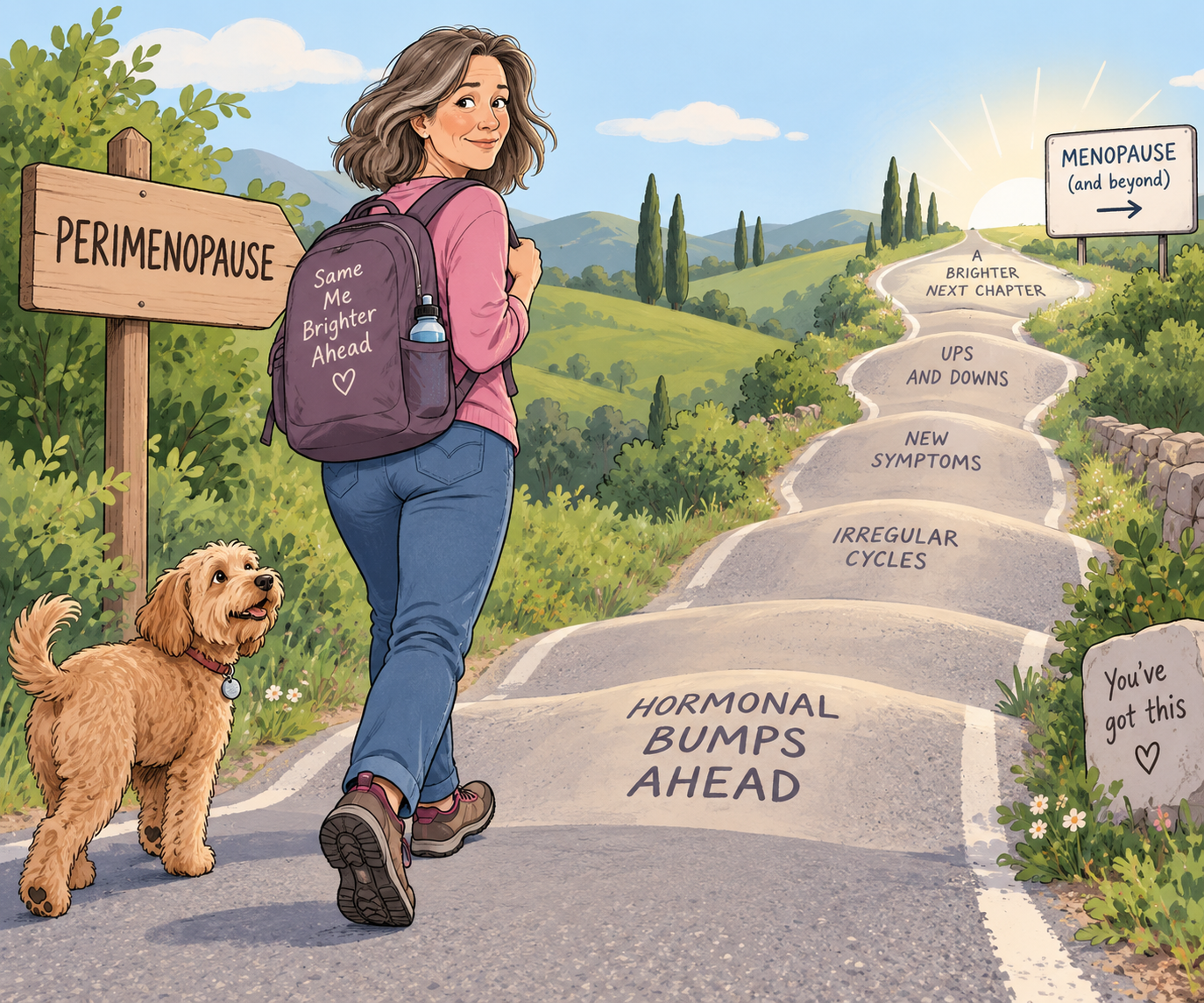
That's why symptoms can come and go — and why one month can feel completely different from the next.
Changing periods are often one of the first signs of perimenopause.
Perhaps your previously reliable 28-day cycle starts arriving every three weeks. Later, the gaps may become longer — six weeks, two months, occasionally several months.
Periods may generally become lighter, but they can be heavier too, and their duration can change as well.
The unpredictability largely reflects the increasingly irregular pattern of ovulation and hormone production.
Eventually, the gaps between periods usually become longer until periods stop altogether.
Hot flushes and night sweats are common, but they are only part of the picture.
You might notice:
- disturbed sleep;
- mood changes, irritability or anxiety;
- difficulty concentrating or “brain fog”;
- headaches;
- joint aches;
- reduced sexual desire;
- vaginal dryness or urinary symptoms;
- changes in hair, weight or body shape.
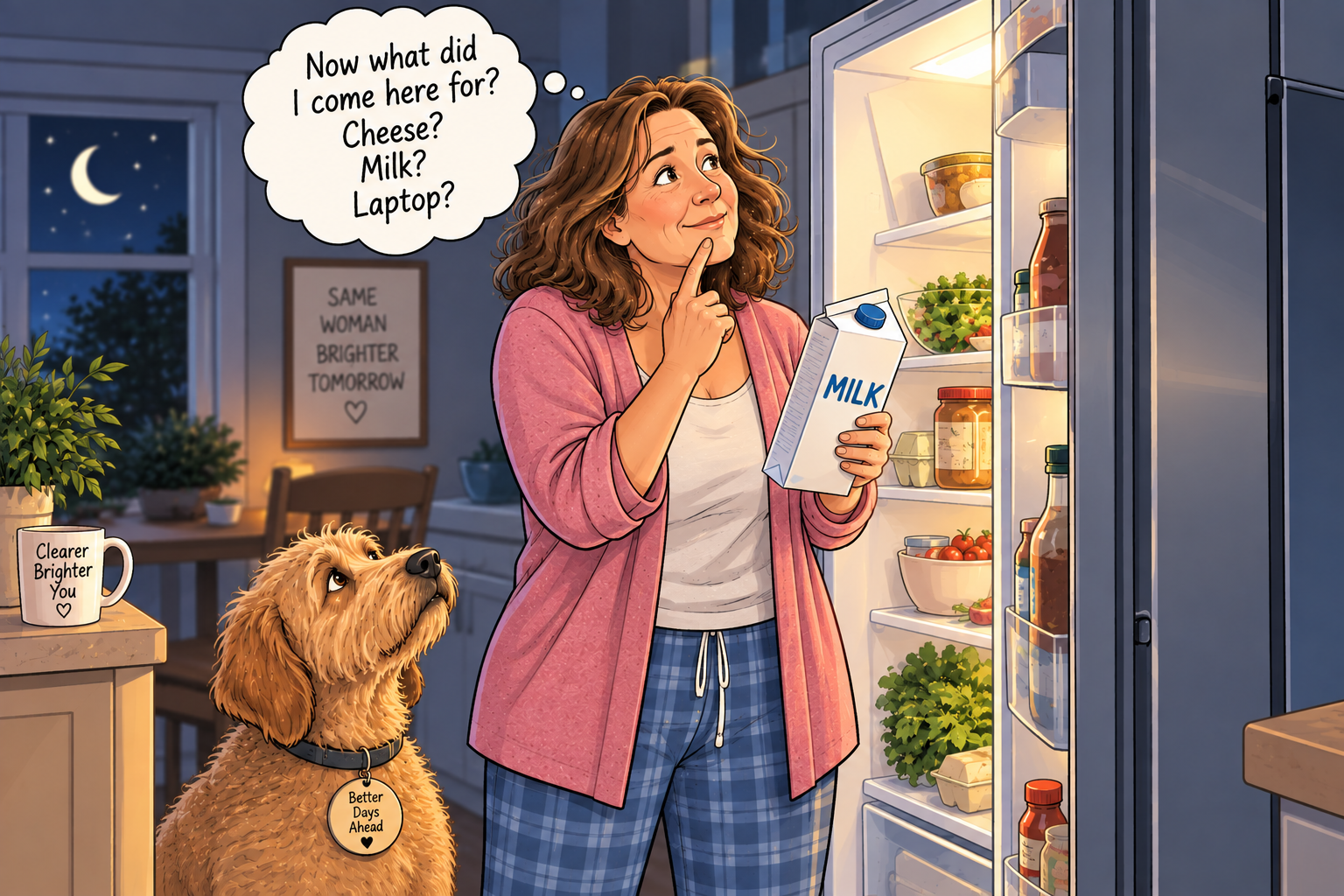
Some women have very few symptoms. Others find that symptoms interfere considerably with sleep, work or everyday life.
Interestingly, sometimes your partner notices the changes before you do — occasionally long before you have put them together yourself.
And there is an important trap here:
Tiredness, poor sleep, low mood and changes in periods can have other causes. Sometimes anaemia, thyroid problems or another medical condition needs to be considered.
And hormones don't exist in isolation. Your 40s can bring changes at work, children growing up or leaving home, relationship pressures and all the ordinary stresses of life.
Sometimes it isn't obvious where one ends and the other begins.
There is considerable variation between women — and unfortunately there isn't a countdown clock.
For many women, perimenopause may last two or three years, but it can be twice that — and occasionally longer.
Symptoms don't necessarily stop when the periods finally stop. Hot flushes and night sweats, for example, may continue afterwards.
We can't look at your symptoms today and reliably tell you exactly how long your perimenopause will last.
The more useful question is often not:
“When will this end?”
but:
“If this is bothering me now, what can I do about it?”
Usually, no.
For a woman over 45 with typical symptoms and changes in her periods, perimenopause can usually be recognised from the history without hormone blood tests.
Why?
Because the hormones themselves are fluctuating.
FSH tends to rise as ovarian function declines. But during perimenopause it can be high on one occasion and quite normal on another.
Blood tests can be useful when the picture isn't straightforward — particularly in younger women, if periods have stopped unusually early, or when another medical condition might explain the symptoms.
And sometimes we do blood tests not to prove perimenopause at all, but to look for something else — anaemia or a thyroid problem, for example.
Yes.
Fertility declines considerably as women get older, but ovulation doesn't stop neatly on a particular birthday.
During perimenopause you may still ovulate occasionally. If an egg is released, pregnancy remains possible.
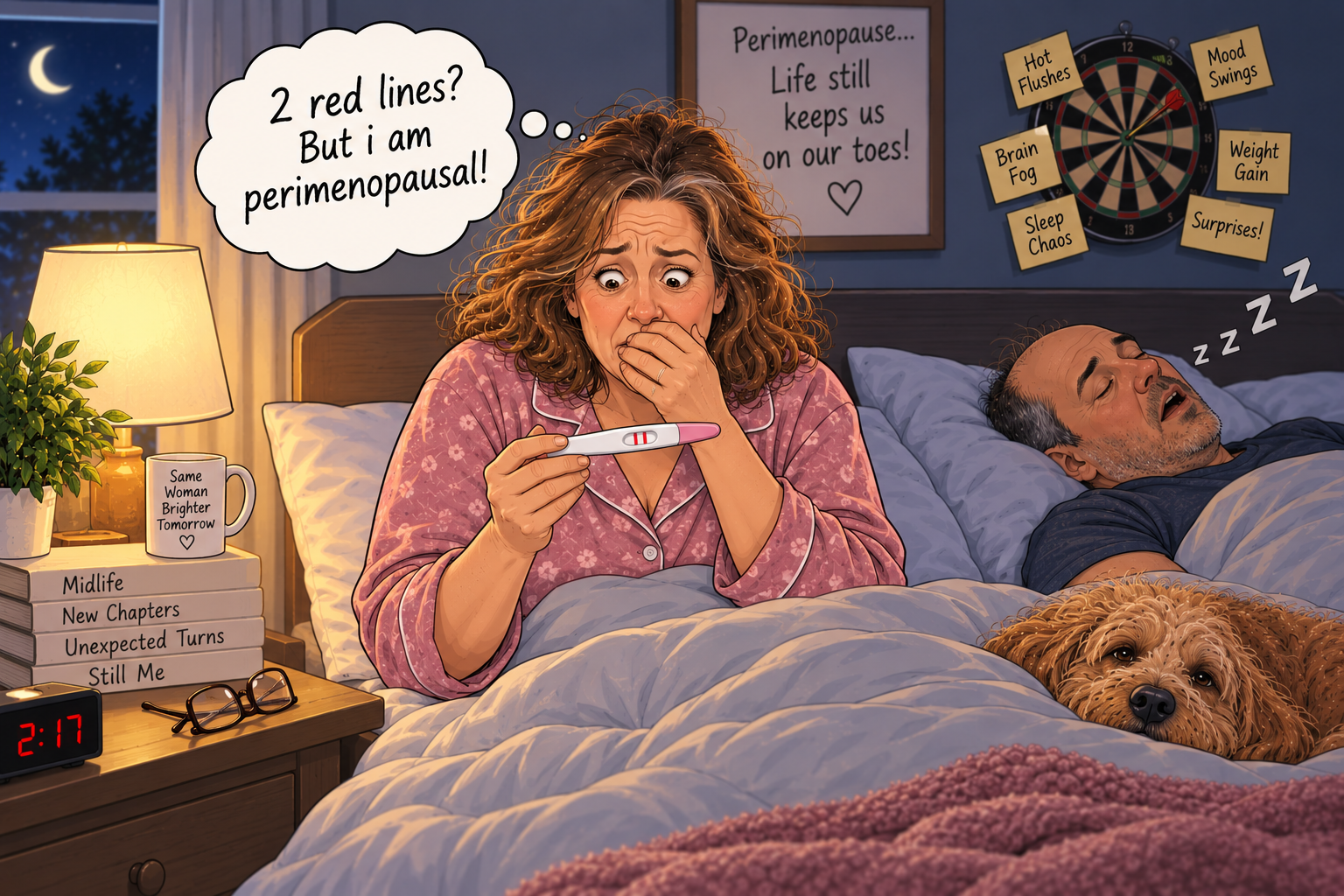
So if you don't want to become pregnant, you may still need contraception.
And remember:
HRT itself is not a contraceptive.
The opposite is important too.
If you do want a baby and your periods are becoming irregular, it may be sensible to discuss fertility sooner rather than simply waiting.
You don't have to wait until symptoms become unbearable.
If hot flushes are disturbing your sleep, your periods are becoming difficult to manage, vaginal dryness is troubling you, or changes in mood or concentration are affecting everyday life, these are perfectly reasonable things to discuss.
But some changes should be assessed rather than automatically attributed to perimenopause.
In particular:
- very heavy or persistent bleeding;
- bleeding between periods;
- bleeding after sex;
- periods stopping unusually early.
Most abnormal bleeding still has a benign explanation.
The point is simply that it should be explained rather than assumed.
No.
If you understand what is happening and your symptoms aren't bothering you, you may not need treatment at all.
But if they are affecting your quality of life, there are effective options.
HRT is particularly effective for hot flushes and night sweats and can help with several other menopausal symptoms.
Vaginal oestrogen can be very effective for vaginal dryness and some urinary symptoms. One less commonly discussed point is that some preparations may transfer small amounts of oestrogen to a male partner during intercourse — something worth discussing when choosing how and when to use it.
Non-hormonal treatments are also available, and troublesome bleeding can often be treated separately.
Which option is right depends on your symptoms, your medical history and what matters to you.
We cover these choices separately in Menopause Matters, because HRT and the alternatives deserve a proper explanation of their own.
You could start with:
- Do my symptoms and periods sound like perimenopause?
- Could anything else explain them?
- Would a blood test actually tell us anything useful?
- Does my bleeding pattern need investigating?
- What could help the symptoms that are bothering me?
- Would HRT be suitable for me?
- Do I still need contraception?
But you don't need a prepared list.
It is perfectly reasonable simply to say:
“I'm not sure what's happening. Can we talk about it?”
That's a medical question too.
Sources and further reading
- NICE — Menopause: identification and management
- NHS — Menopause
- British Menopause Society / Women's Health Concern
- RCOG — relevant patient information
Medical review
Medically reviewed by Dr Mahadeo Bhide, MD, MRCOG
Last medically reviewed: September 2026